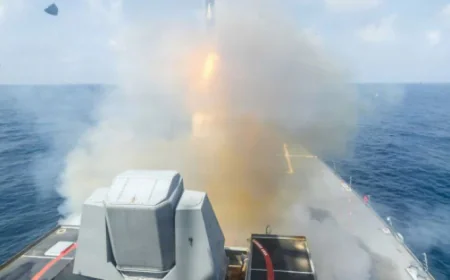























US Military Laser Shoots Down Border Patrol Drone Near El Paso
The US military used a directed-energy weapon to destroy a Customs and Border Protection drone near El Paso, Texas, prompting FAA to close additional airspace.
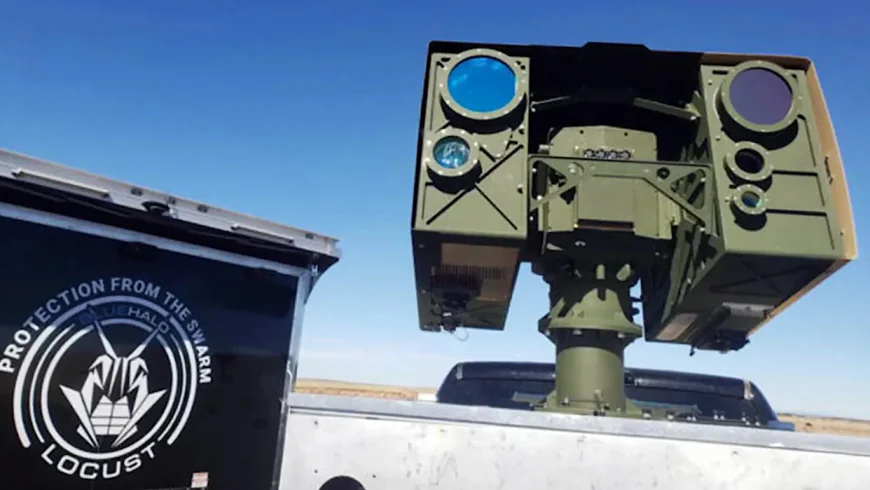
Pentagon Laser Destroys US Border Drone Over Texas in Friendly-Fire Incident
The United States military accidentally destroyed a Customs and Border Protection surveillance drone near El Paso, Texas, using a directed-energy laser weapon in what members of Congress confirmed on Thursday, February 27, 2026, was a friendly-fire incident. The Federal Aviation Administration responded by closing additional restricted airspace over the region as investigators worked to determine how the military came to fire on its own government's equipment.
Members of the House Homeland Security Committee revealed the incident during a closed briefing, with the information subsequently confirmed by two congressional sources speaking on condition of anonymity. The incident took place earlier this week during what sources described as a military laser exercise near the US-Mexico border.
The FAA issued a Notice to Air Missions expanding restricted airspace over the El Paso sector within hours of the incident being confirmed. No human casualties were reported, and the drone was unmanned. But the incident raised immediate questions about military-civilian coordination in border security operations, where aircraft from multiple agencies now routinely operate in the same corridors.
How It Happened
Customs and Border Protection uses a fleet of large surveillance drones, primarily General Atomics Predator B variants, to monitor stretches of the southern border that are too rugged or remote for ground patrols. These aircraft fly at high altitude and relay real-time imagery to ground stations.
The US military has been deploying directed-energy weapons, including high-energy lasers capable of disabling aircraft and missiles, to border regions as part of a broader anti-drone security posture. Sources told Congress that the military unit conducting the exercise failed to properly verify the identity of the aircraft before firing.
According to Dr. Paul Scharre, Senior Fellow at the Center for a New American Security and a leading authority on autonomous weapons, "This is exactly the kind of accident that weapons developers and military planners have warned about for years. When multiple agencies operate weapons in the same airspace, coordination failures become almost inevitable."
Congressional Anger and FAA Response
Senior lawmakers from both parties expressed fury at the Pentagon. Rep. Mark Green, chairman of the House Homeland Security Committee, said his committee would demand a full accounting from Secretary of Defense Pete Hegseth within 72 hours. Sen. John Cornyn of Texas called the incident "outrageous" and demanded to know why border patrol assets were placed at risk.
The FAA said it was working with the Defense Department and the Department of Homeland Security to restructure airspace designations around the El Paso corridor to prevent recurrences. The new restrictions affect private aviation, commercial flights, and government aircraft operating in a zone extending roughly 40 miles north of the border.
CBP said the lost drone had been in service for four years and cost approximately $17 million. A replacement will require a procurement process that could take 18 to 24 months. In the meantime, ground surveillance capacity in the affected sector will be reduced — an outcome that the Pentagon's border security partners consider deeply counterproductive.