


















Pakistan Bombs Kabul as Afghanistan-Pakistan War Deepens
Pakistan carried out airstrikes on Kabul, Kandahar, and Paktia as its conflict with Afghanistan's Taliban government escalated into what both sides are now calling open war.

Pakistan Bombs Kabul in Major Escalation Against Taliban-Ruled Afghanistan
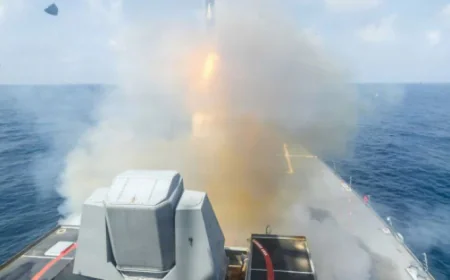
Pakistan's warplanes struck Kabul. In a dramatic escalation that both sides are now describing as open war, Pakistani Air Force jets carried out airstrikes on the Afghan capital Kabul as well as on Kandahar and the eastern province of Paktia, according to officials in both countries. The strikes came as the latest tit-for-tat exchange in a conflict that has been building since October 2025, when border fighting killed more than 70 people on both sides.
Afghan Taliban spokesperson Zabihullah Mujahid confirmed the strikes Sunday, calling them a "blatant act of aggression against Afghan sovereignty." The Taliban claimed significant casualties in Kandahar, Afghanistan's second-largest city, though exact figures could not be independently verified. Pakistan's military acknowledged the operation, characterizing it as a "targeted counterterrorism strike" against Pakistan Taliban — also known as the Tehrik-i-Taliban Pakistan, or TTP — fighters allegedly operating from Afghan soil.
Pakistan's Foreign Minister Ishaq Dar framed the strikes as a product of exhausted diplomacy. "Pakistan made every effort to keep the situation normal through direct means and through friendly countries. It engaged in full-fledged diplomacy. But the Taliban became a proxy for India," Dar said, a claim that Kabul strongly denied and that analysts noted significantly raises the diplomatic stakes by linking the Afghanistan conflict to the broader India-Pakistan rivalry.
Deep Ideological Ties Link Afghan and Pakistani Taliban
The Pakistan Taliban and Afghanistan's ruling Taliban share profound ideological roots, both tracing their origins to the same Deobandi Islamic tradition, the same borderland communities, and the same decades of armed struggle. But they are distinct organizations with different — and sometimes conflicting — interests. Pakistan has long maintained that Afghanistan's Taliban government should use its influence to rein in the TTP. Kabul has consistently refused, insisting the two groups are separate.
The border they share is the 2,611-kilometer Durand Line, one of the most contested and porous frontiers in the world. Historically drawn by British colonizers in 1893 and never accepted as legitimate by Afghan governments, the Durand Line has been the source of bilateral tension for over a century. Taliban-ruled Afghanistan refuses to recognize it as an international border.
According to Michael Kugelman, Director of the South Asia Institute at the Wilson Center, "Pakistan has conventional military superiority over Afghanistan. But the Taliban have spent decades refining a lethal repertoire of guerrilla tactics. Pakistan can bomb Kabul. It cannot hold or pacify Afghan territory. There is no clean military solution here."
Millions of Afghan Refugees Now in Jeopardy
Pakistan currently hosts an estimated 3 to 4 million Afghan refugees — the legacy of four decades of war, poverty, and instability in Afghanistan. The escalating conflict places those communities in an increasingly precarious position, potentially caught between hostility from Pakistani authorities and the inability to return safely to a country now being bombed.
Aid organizations including UNHCR and the International Committee of the Red Cross issued urgent statements Sunday calling for protection of civilian populations on both sides of the border and warning that further escalation could produce a new humanitarian emergency on top of the multiple crises already unfolding in the region.
With Pakistan's military possessing overwhelming air power and Afghanistan's Taliban holding no air force but considerable guerrilla resilience, analysts say the conflict faces no clear endgame — raising the possibility of a grinding, low-level war along one of the world's most unstable and nuclear-armed borders.