





















Oil Prices Set to Surge Monday as Strait of Hormuz Fears Mount
Crude oil markets are bracing for a major price surge Monday as traders fear Iran could close the Strait of Hormuz, through which 31 percent of global seaborne crude oil flows.
Global Oil Markets Brace for Major Price Spike as Iran War Escalates
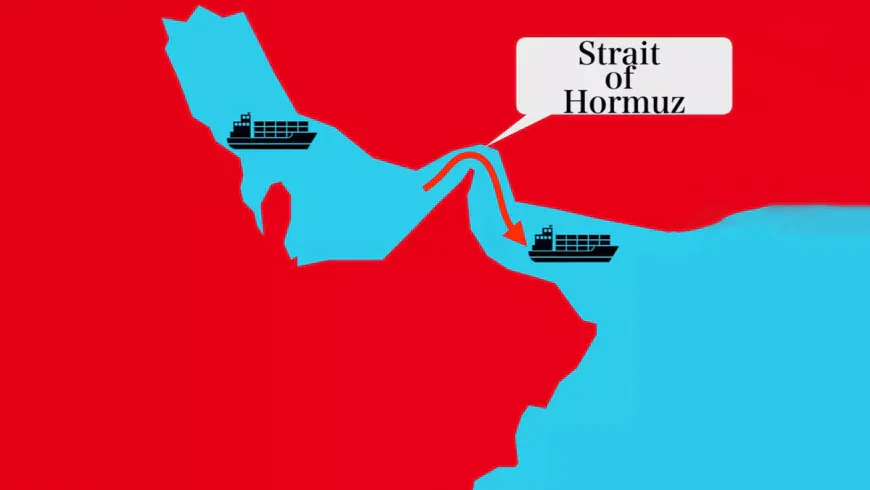
Oil traders are holding their breath. Crude oil markets are expected to open Monday with a significant price surge as the US-Iran conflict threatens to disrupt the Strait of Hormuz — the narrow chokepoint through which roughly 31 percent of global seaborne crude oil flows. Prediction markets on Kalshi currently assign a 79 percent probability that US crude oil hits at least $73 per barrel when energy futures open at 6:00 p.m. ET Sunday.
West Texas Intermediate crude closed Friday at $67.02 per barrel, having already run up 17 percent in 2026 in anticipation of possible military action against Iran. Brent crude, the international benchmark, closed at $72.48 per barrel on Friday after rising 2.45 percent. Both benchmarks are expected to open substantially higher Monday morning when Asian markets resume trading.
OPEC+, of which Iran is a founding member, announced Sunday that it would raise its production quota by 220,000 barrels per day — above the previously expected adjustment of 137,000 bpd. Industry sources said the move was designed to "mute some upside pressure on prices Monday morning," though analysts widely agreed it would provide only marginal relief against the geopolitical risk premium now being priced into the market.
Strait of Hormuz: The World's Most Critical Oil Chokepoint
The Strait of Hormuz sits between Iran and Oman at the entrance to the Persian Gulf. About 13 million barrels of crude oil per day transited the strait in 2025, accounting for roughly 31 percent of all global seaborne crude flows, according to market intelligence firm Kpler. Iran has repeatedly threatened over the decades to close the strait in the event of military conflict with the United States.
Iran itself produces more than 3 million barrels per day, making it the fourth-largest producer in OPEC. Saudi Arabia, Iraq, Kuwait, and the UAE — all of whose exports flow through or near the strait — collectively add tens of millions of additional barrels per day to global supply.
Kenneth Goh, director of private wealth management at UOB Kay Hian in Singapore, put the distinction sharply: "Venezuela was a production story. Iran is a chokepoint story." If Iran acts to close or disrupt the strait, the consequences for global energy markets — and by extension for inflation, economic growth, and political stability worldwide — would dwarf any previous oil supply disruption since the 1973 Arab embargo.
Equities and Safe-Haven Assets React
Beyond oil, financial markets are bracing for a broad risk-off move Monday. Alicia Garcia-Herrero, chief economist for Asia-Pacific at Natixis, predicted global equities could fall 1 to 2 percent or more at open, with US Treasury yields falling 5 to 10 basis points and oil jumping 5 to 10 percent. "No hero bets," she cautioned, advising investors to wait for Iran's next moves before making large directional trades.
Gold has already moved higher, approaching $3,100 per troy ounce as investors shifted into traditional safe-haven assets over the weekend. Bitcoin showed volatility spikes but analysts noted that liquidity tightening during a geopolitical crisis typically limits cryptocurrency upside momentum.
For oil-importing economies — including India, which imports 80 to 85 percent of its crude needs, as well as Japan, South Korea, and most of Europe — a sustained oil price spike represents a direct threat to economic growth, inflation targets, and political stability in governments already navigating difficult domestic environments.